Why Do Cats Dislike Moving? Cat Stress in a New Place
อ่านภาษาไทย →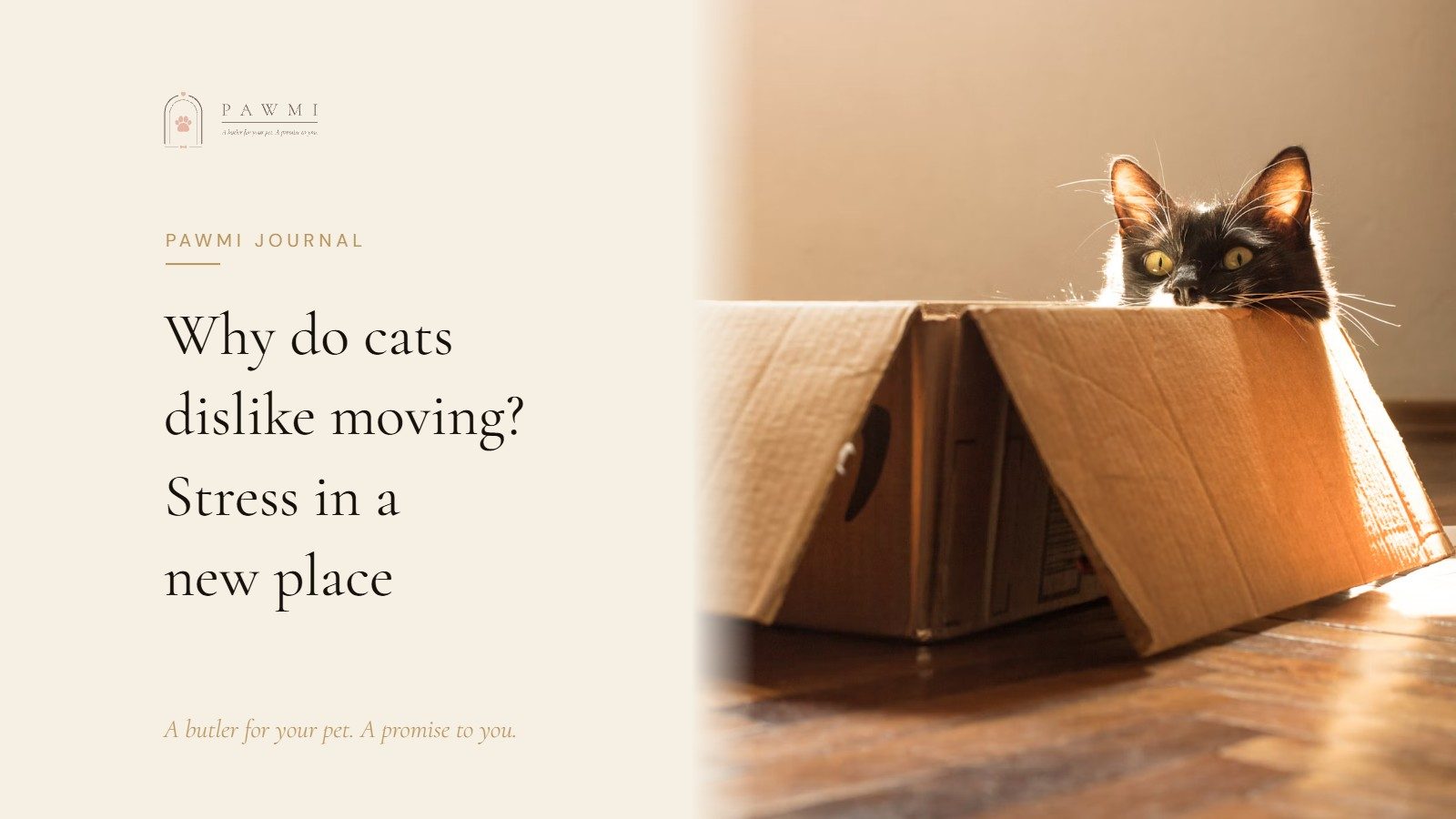
Have you noticed that the moment you take out the cat carrier, your cat disappears? Or that at the vet your cat trembles, cries or goes unusually quiet? That's not your cat being difficult. It's because cats are deeply attached to "their place".
Understanding this helps you choose better care for your cat while you're away.
Cats are territorial animals
In the wild, cats are both predators and prey. Their survival depends on knowing their territory well: where to hide, which way to escape and where it's safe.
House cats keep this instinct. Home is a territory they know inch by inch. Cats mark it with scent by rubbing their faces and bodies or scratching things, and these scents tell them, "This is my place, and it's safe."
What happens when a cat has to move?
They lose their sense of safety
In a new place, there's none of their own scent around and they don't know where it's safe, so their alarm system stays switched on.
Too much that's new at once
Strange smells, strange sounds, strange light, and especially the smell or sound of other cats, all have to be assessed as a possible threat.
Their routine changes
Cats love consistency: mealtimes, nap times, favourite spots. When everything changes at once, they feel they have no control.
The stress of the journey
Being put in a carrier, riding in a car and hearing traffic is already a lot of stress for many cats.
Signs your cat is stressed by a move
- Hiding for long periods and refusing to come out
- Not eating, or eating much less
- Going to the toilet outside the litter box
- Over-grooming until the fur thins in patches
- Crying more than usual, or being unusually quiet
- Hissing, growling or becoming more aggressive
- Diarrhoea, vomiting or urinary problems
Important: cats who don't eat for several days are at risk of serious health problems, especially overweight cats. If your cat hasn't eaten for more than 24 hours, talk to your vet. (Read more about stress signs in Do Cats Get Lonely When Their Owners Are Away?)
Which cats stress more easily?
- Senior cats, who find it harder to adapt to change
- Timid cats or cats with bad past experiences
- Indoor cats who have never been anywhere else
- Cats with existing conditions, which stress can make worse
- Cats who don't get along with other cats
A better option when you travel
Instead of moving your cat somewhere new, the option that reduces stress the most is letting your cat stay home and having someone come to care for them. Your cat keeps the same territory and routine and avoids the journey entirely.
A pet sitter who understands cats will keep the routine as close to normal as possible, for example feeding at the usual times, using the same bowls and not moving anything around. (Compare your options in Cat Hotel or Pet Sitter at Home: Which Is Better?)
If a move can't be avoided, how to reduce stress
Sometimes a move is unavoidable, such as moving house or recovering at a clinic. These steps help:
- Get your cat used to the carrier in advance by leaving it open at home with a blanket and treats
- Bring things that smell like home, such as a blanket, bed or a shirt that smells of you
- Use the same food, litter and bowls
- Provide a hiding place in the new space, such as a cardboard box
- Give your cat time to adjust and don't force them out
Pawmi: your cat stays home, the way they like it
Pawmi Pet Butlers are trained to work at your cat's pace, without forcing or rushing, and to keep your cat's routine intact. Before the first visit we collect detailed information about your cat's personality, food and favourite spots when you book, and with the 5-Visit Bundle your butler comes for a free Meet & Greet at home, so your cat barely notices anything has changed.
Summary
Cats dislike moving because home is what makes them feel safe. Understanding this helps you choose kinder care for your cat, and the way to reduce stress the most when you travel is to let your cat stay at home.
Talk to Pawmi about caring for your cat on LINE OA @pawmi.official or at pawmipetbutler.com.
FAQ
How long does it take a cat to adjust to a new place?
It varies a lot. Some cats take a few days, others several weeks. For short stays, many cats won't have adjusted before they go home again.
Do cat pheromone products help?
Synthetic pheromone products may help some cats feel calmer. Talk to your vet before using them.
What if my cat is stressed after coming home?
Give your cat space and time, keep the routine the same and watch their eating and litter box habits. If anything is still unusual after a day, talk to your vet.